Common Mistakes When Using 7075 Aluminum Screws (And How to Avoid Structural Failures)
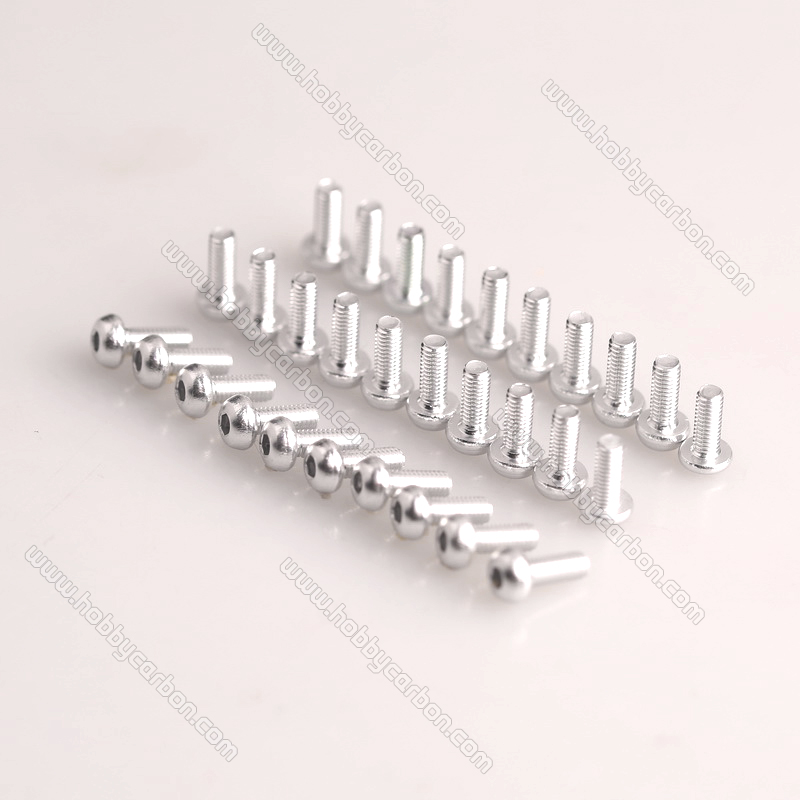
In fields with stringent requirements for strength and lightweighting, such as aerospace, high-end sports equipment, and new energy equipment, 7075 aluminum alloy screws, with their yield strength of 710MPa and density of only 2.8g/cm³, have become an ideal alternative to steel screws. However, the leap in material performance has not eliminated the risks of use—structural failures due to incorrect selection, process defects, or improper maintenance still occur frequently. The following will analyze the correct use of 7075 aluminum alloy screws from the perspectives of material characteristics, industry scenarios, and typical mistakes.
1. Material Characteristics: The Sensitive Gene Behind High Strength
7075 aluminum alloy belongs to the Al-Zn-Mg-Cu series of ultra-dense aluminum, and its strength originates from the η-phase (MgZn₂) strengthening phase formed by zinc and magnesium elements. However, this strengthening mechanism also brings three major usage taboos:
Stress corrosion sensitivity: Under tensile stress and in an environment where chloride ions and moisture coexist, the η-phase will accelerate crack propagation. Experimental data shows that in humid air containing 0.5% NaCl, the critical stress corrosion strength of 7075 aluminum alloy is only 40% of its yield strength.
Heat treatment dependence: 7075 aluminum alloy in the T6 state (solution treatment + artificial aging) reaches its peak strength, but if it is not aged or is insufficiently aged, the strength will decrease by more than 30%.
Low-temperature brittleness: In environments below -50℃, the impact toughness of 7075 aluminum alloy will significantly decrease, requiring the addition of trace amounts of zirconium (Zr) to improve low-temperature performance.
These characteristics determine the usage boundaries of 7075 aluminum alloy screws: tensile stress must be avoided in humid salt spray environments, in unaged conditions, or under extremely low temperatures.
Case 1: Drone Arm Connection Failure
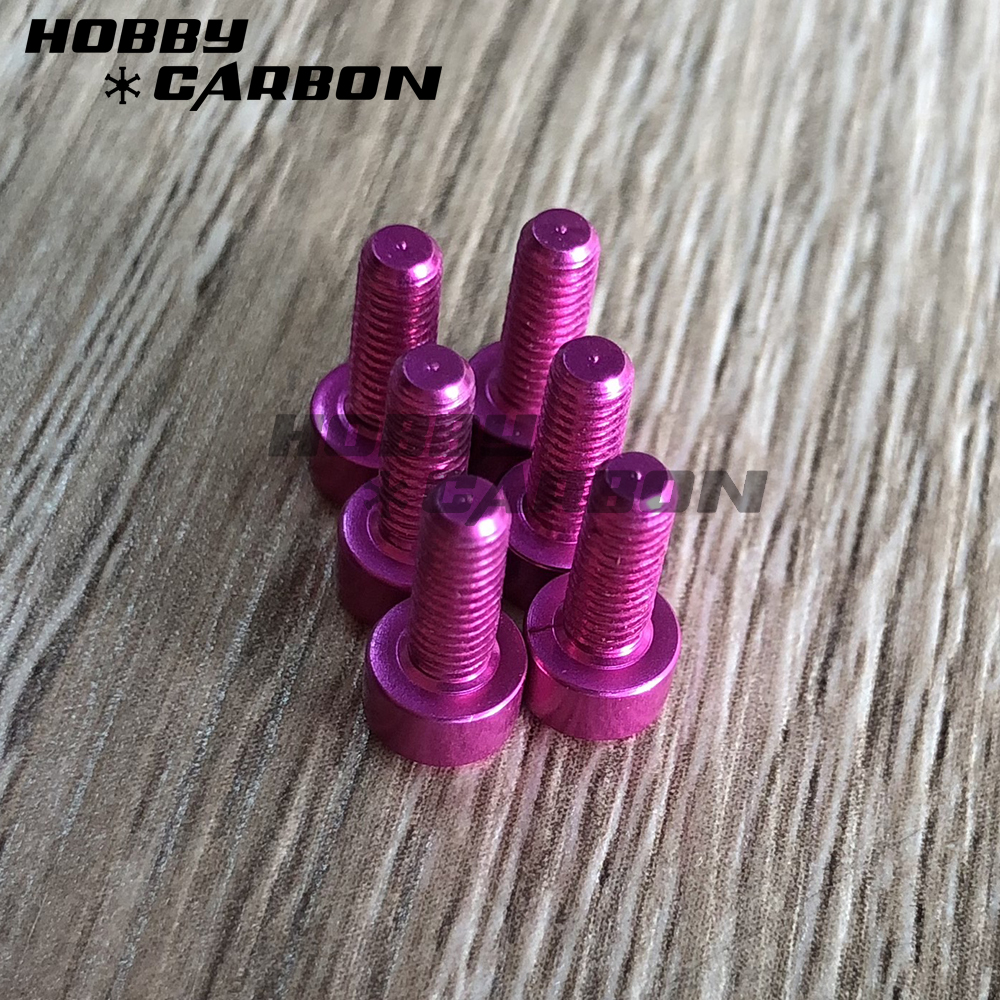
A consumer drone manufacturer replaced steel screws with 7075 aluminum alloy screws to reduce weight, but did not anodize the threaded holes. After 300 hours of flight, cracks appeared at the arm connection.
Cause Analysis: Fretting wear at the thread engagement point damaged the alumina protective film, leading to chloride ion corrosion of the substrate; Lack of thread-locking adhesive during assembly caused vibration to weaken the preload, accelerating fatigue crack initiation due to alternating stress.
Case 2: Battery Pack Bracket Fracture in a New Energy Vehicle
An electric vehicle manufacturer used 7075 aluminum alloy screws to fix the battery module. The bracket fractured during a -20℃ low-temperature road test.
Cause Analysis: The screws were not tested for low-temperature toughness, resulting in insufficient impact resistance at low temperatures; The bracket design did not consider the elastic modulus of aluminum alloy (only 1/3 that of steel), leading to a stress concentration factor 2.5 times higher than that of a steel structure.
Case 3: Fatigue Fracture of a Carabiner
An outdoor brand replaced the steel pins of its carabiners with 7075 aluminum alloy screws. The carabiners fractured after six months of use, causing a user to fall off a cliff.
Root Cause Analysis: The M3 small-diameter screw was incorrectly selected, as its fatigue resistance is insufficient (the fatigue limit of 7075 aluminum alloy decreases significantly with decreasing diameter); Rotational bending fatigue testing was not performed, resulting in cyclic loads exceeding three times the design life during actual use.
3. Avoidance Guidelines: Full-Process Control from Design to Maintenance
Selection Stage:
Environmental Compatibility: In marine climates or chemical environments, screws with anodized and sealed treatment must be selected, with an oxide film thickness ≥25μm;
Size Optimization: Avoid using screws with diameters <M5. If small-diameter screws are necessary, 7050 aluminum alloy should be selected (its fatigue performance is superior to 7075);
Temperature Verification: In environments below -50℃, a zirconium-modified 7075-Zr alloy should be selected, or titanium alloy screws should be used instead.
Assembly Stage:
Preload Control:Use a torque wrench to set the torque to 50%-60% of the material's yield strength to avoid overtightening and hydrogen embrittlement (if using galvanized washers);
Lubrication and Protection:Apply molybdenum disulfide lubricant to the threads to reduce fretting wear and prevent chloride ion corrosion;
Anti-Loosening Design:For vibration environments, prioritize nylon lock nuts or double nuts for anti-loosening rather than spring washers (which may scratch the oxide film).
Maintenance Stage:
Regular Inspection:After every 500-hour flight/operation cycle, inspect the thread root for cracks using a penetrant test (PT);
Replacement Criteria:If oxide film peeling, thread wear exceeding 0.1 mm, or preload reduction >20% is found, the screws must be replaced immediately;
Storage Specifications:Screws must be stored in a dry environment (humidity <40%) in a sealed container, avoiding contact with acids and alkalis.
4. Future Trends: Material Modification and Intelligent Monitoring
To break through the application boundaries of 7075 aluminum alloy, the industry is exploring two major solutions:
Laser Shock Strengthening: By using high-energy lasers to form a residual compressive stress layer on the screw surface, fatigue life can be increased by 3-5 times;
Embedded Sensors: Integrating strain sensors into the screw head to monitor changes in preload in real time and using the Internet of Things to provide early warnings of structural failure risks.
The reliability of 7075 aluminum alloy screws is essentially a triangular balance between materials science, mechanical design, and manufacturing processes. From drones to new energy vehicles, every lesson learned from structural failures is driving the industry to establish more stringent standards—only by respecting material properties and engineering principles can high-strength aluminum alloys truly become the foundation of safety.