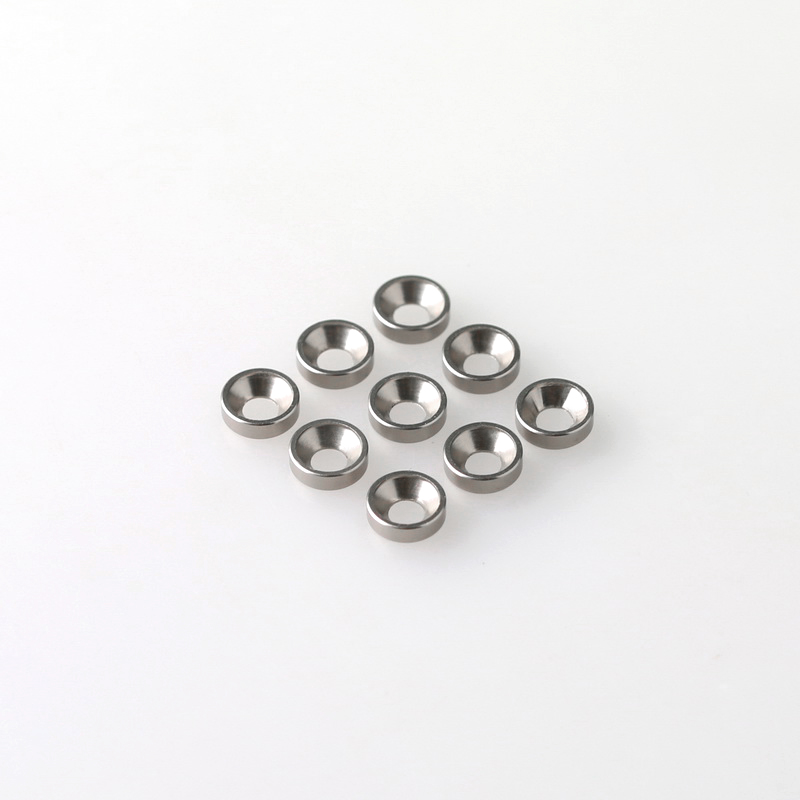
Aluminum Countersunk Washers vs. Steel: The Corrosion Resistance Revolution Driving Industry Adoption
In humid, salt spray, or chemically corrosive environments, traditional steel countersunk washers often fail due to corrosion, while aluminum countersunk washers are redefining the standard for industrial fasteners thanks to their superior corrosion resistance. Behind this material replacement revolution lies the synergistic evolution of metal smelting technology, surface treatment processes, and evolving industry demands.
1. Material DNA: Aluminum's Natural Corrosion Resistance Advantage
The corrosion risk of steel washers stems from the chemical properties of their iron-based material—in humid environments, iron reacts with oxygen and water molecules to form loose rust (Fe₂O₃·nH₂O), causing volume expansion and damaging the connection structure. Aluminum washers, however, achieve "self-protection" through their own oxidation reaction: aluminum reacts with oxygen to form a dense aluminum oxide (Al₂O₃) film, only 5-10 nanometers thick, effectively preventing the intrusion of water, oxygen, and corrosive ions.
This natural passivation property extends the lifespan of aluminum gaskets by 3-5 times in harsh environments such as marine engineering and chemical equipment. Experimental data shows that in a 3.5% NaCl salt spray environment, the corrosion rate of untreated aluminum gaskets is only 1/20th that of carbon steel, while the corrosion rate of anodized aluminum gaskets can be further reduced to 1/100th.
2. Manufacturing Technology: From Material Modification to Structural Optimization
The improved corrosion resistance of aluminum gaskets is inseparable from breakthrough innovations in manufacturing processes:
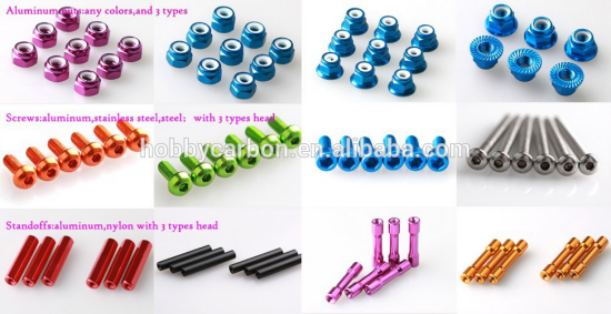
Alloying Design: By adding elements such as magnesium (Mg) and silicon (Si), aluminum alloys such as 6061-T6 and 5052-H32 are formed. While maintaining lightweight (density only 1/3 that of steel), the yield strength is increased to 240-300 MPa, approaching the level of low-carbon steel.
Precision Forming Technology: Cold heading technology is used instead of traditional stamping, which refines the internal grains of the gasket, eliminates micro-cracks, and reduces the penetration path of corrosive media. Cold-forged aluminum washers achieve a density of up to 99.2%, a 15% improvement over stamped parts.
Surface treatment revolution: Anodizing technology generates a 10-30μm oxide film on the aluminum surface through electrolysis, and combined with sealing treatment, the pores in the film layer can be blocked; micro-arc oxidation technology can form a ceramic coating on the surface, achieving a hardness of HV1000 or higher and improving wear resistance by 5 times.
In contrast, anti-corrosion treatments such as galvanizing and Dacromet coating on steel washers pose a risk of hydrogen embrittlement and are prone to peeling and failure in high-temperature or frictional environments.
3. Industry Applications: From Edge Scenarios to Mainstream Choice
The corrosion resistance advantage of aluminum washers is driving the continuous expansion of their application boundaries:
Marine Engineering: In offshore wind power platforms, ship decks, and other scenarios, aluminum washers can resist salt spray corrosion in wave-splashed areas. Combined with 316 stainless steel bolts, they achieve a lightweight design that "replaces steel with aluminum," reducing the weight of a single wind turbine foundation by up to 2 tons.
In the new energy sector: Photovoltaic brackets, energy storage battery boxes, and other equipment require long-term outdoor operation. The weather resistance of aluminum gaskets makes them an ideal alternative to steel gaskets. Data from a large-scale photovoltaic project shows that the maintenance cycle for aluminum gaskets has increased from twice a year to once every five years.
In the food and medical sectors: In food processing equipment requiring frequent cleaning and disinfection, the non-magnetic and non-leaching heavy metal properties of aluminum gaskets better meet hygiene standards than galvanized steel gaskets, and they are widely used in beer brewing, dairy processing, and other scenarios.
4. Market Trends: Cost Parity Drives Accelerated Replacement
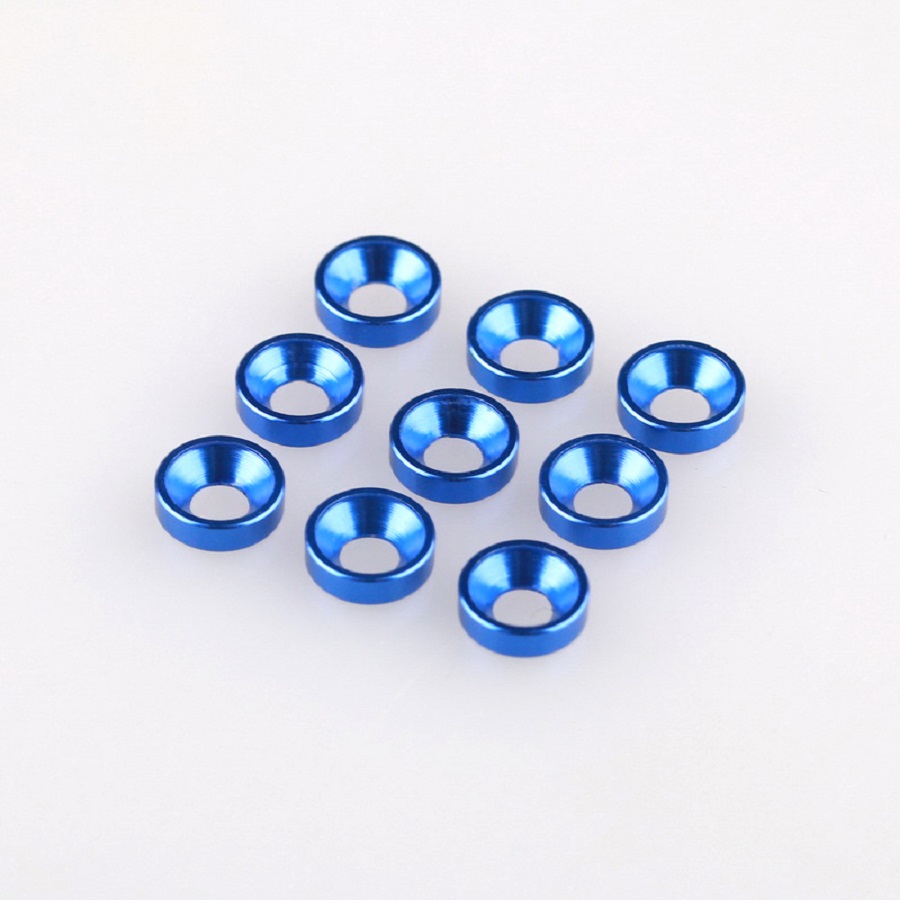
Although the unit price of aluminum gaskets is 30%-50% higher than that of carbon steel gaskets, their life-cycle cost advantage is reshaping the market landscape. Taking offshore wind power projects as an example:
Initial Costs: The procurement cost of aluminum gaskets increases by 40%, but because no anti-corrosion coating is required, the overall material cost only increases by 25%.
Maintenance Costs: Steel gaskets need to be replaced entirely every 5 years, while aluminum gaskets have a design life of 20 years, reducing maintenance costs by 80%. Implicit Benefits: The lightweight nature of aluminum washers reduces transportation energy consumption and lowers the structural load on wind turbine towers, indirectly improving power generation efficiency.
Market research institutions predict that the global aluminum fastener market will expand at a CAGR of 8.2% from 2024 to 2030, with the countersunk washer segment growing at 12%, primarily driven by mandatory substitution policies in corrosion-sensitive industries such as new energy and marine engineering.
5. Future Challenges: Technological Iteration and Standardization
The widespread adoption of aluminum washers still faces two major challenges: first, creep issues at high temperatures, requiring the development of heat-resistant aluminum alloys by adding rare elements such as scandium (Sc); second, cross-industry certification barriers, necessitating the establishment of a unified standard system covering dimensions such as salt spray testing and stress corrosion testing.
In this materials revolution, companies mastering core technologies such as alloy formulation design and surface treatment processes will dominate the market for next-generation corrosion-resistant fasteners. The rise of aluminum countersunk washers is not only a victory for materials science, but also a microcosm of the transformation of industrial design concepts towards "full life cycle value"—when corrosion resistance is elevated from a performance parameter to a design criterion, the underlying logic of the entire manufacturing industry is being rewritten.