A tripod is more than just a support tool for professional photographers, surveyors, and users of optical equipment—it is the bedrock of precision. However, as gear gets heavier and outdoor environments are more demanding, ordinary aluminium or entry-level composite tripods are not cutting it.
If you are a brand or OEM looking to win in the high end market the upgrading to premium Carbon Fibre Telescoping Tubes is no longer optional, it’s the competitive edge.
In this post we’ll explore the top pain problems tripod users face, why carbon fibre is the ideal solution and how advanced customisation like as precision drilling and laser engraved graduations can take your product line to the next level.
Professional Tripod Usage Troubleshooting
We have to understand the end-user difficulties first, so we can make a better tripod. In the area professionals are constantly fighting three fundamental issues:
Weight to Stability Trade Off Fluid heads and heavy telephoto lenses need a rock-solid basis. Aluminium tripods are strong but punishingly heavy for long expeditions. Cheap plastics or poorly rolled composite tubes save weight but cause micro-vibrations that ruin long exposure photographs or optical alignments.
Environmental Degradation and Leg Seizure Tripods are typically employed in extreme situations — sand dunes, water, sub zero temperatures. Traditional metal tubes are prone to corrosion and the moisture that builds up between telescoping portions can cause seizing of the legs or permanent deterioration.
Poor height adjustment: In fast-paced shooting circumstances, setup speed is important. Standard tubes without apparent alignment markers have to be eyeballed by the user for each leg segment and that costs precious time.
If you are a brand or OEM looking to win in the high end market the upgrading to premium Carbon Fibre Telescoping Tubes is no longer optional, it’s the competitive edge.
In this post we’ll explore the top pain problems tripod users face, why carbon fibre is the ideal solution and how advanced customisation like as precision drilling and laser engraved graduations can take your product line to the next level.
Professional Tripod Usage Troubleshooting
We have to understand the end-user difficulties first, so we can make a better tripod. In the area professionals are constantly fighting three fundamental issues:
Weight to Stability Trade Off Fluid heads and heavy telephoto lenses need a rock-solid basis. Aluminium tripods are strong but punishingly heavy for long expeditions. Cheap plastics or poorly rolled composite tubes save weight but cause micro-vibrations that ruin long exposure photographs or optical alignments.
Environmental Degradation and Leg Seizure Tripods are typically employed in extreme situations — sand dunes, water, sub zero temperatures. Traditional metal tubes are prone to corrosion and the moisture that builds up between telescoping portions can cause seizing of the legs or permanent deterioration.
Poor height adjustment: In fast-paced shooting circumstances, setup speed is important. Standard tubes without apparent alignment markers have to be eyeballed by the user for each leg segment and that costs precious time.
The Solution: The Engineered Advantages of Carbon Fiber Telescoping Tubes
Switching to optimized carbon fiber telescoping segments directly resolves these field failures, offering unmatched mechanical performance.
| Performance Metric | Carbon Fiber Tubes | Traditional Aluminum Tubes |
| Strength-to-Weight Ratio | Exceptionally High (Ultra-lightweight) | Moderate (Heavy for the same rigidity) |
| Vibration Dampening | Superior (Absorbs micro-movements instantly) | Poor (Propagates harmonics and shakes) |
| Thermal Stability | Near-Zero Coefficient of Thermal Expansion | Expands/Contracts significantly in extreme temps |
| Corrosion Resistance | Immune to rust, saltwater, and chemicals | Prone to oxidation and pitting over time |
2. Better Vibration Isolation Carbon fibre has inherent material damping properties. Carbon fibre reduces high frequency micro motions (wind, shutter shock) to deliver razor sharp imaging unlike metals that transmit micro vibrations to the lens.
3. Comfort and Stability in the Heat In winter the metal tubes are freezing cold, in the desert heat they are scorching hot. Carbon fibre is a neutral temperature therefore can be pleasantly handled without huge foam grips.
More importantly, it has a low coefficient of thermal expansion so that the telescopic joints do not bind or loosen as the temperature changes.
More importantly, it has a low coefficient of thermal expansion so that the telescopic joints do not bind or loosen as the temperature changes.
Enhancing Tripod Functionality: Precise Post Processing & Customisation And a luxury tripod is more than just raw carbon tubing. Seamless flip-locks, twist-locks and mounting components require additional machining with a high level of precision.
Here’s how our advanced manufacturing skills combine with special assembly and usability challenges: CNC Precision Drilling and Slotting (Anti-Twist Systems)One of the more annoying things about telescoping tubes is rotation (legs twist on release) in the axial direction. CNC precision drilling and internal slotting are used to create custom alignment tracks and positioning holes.
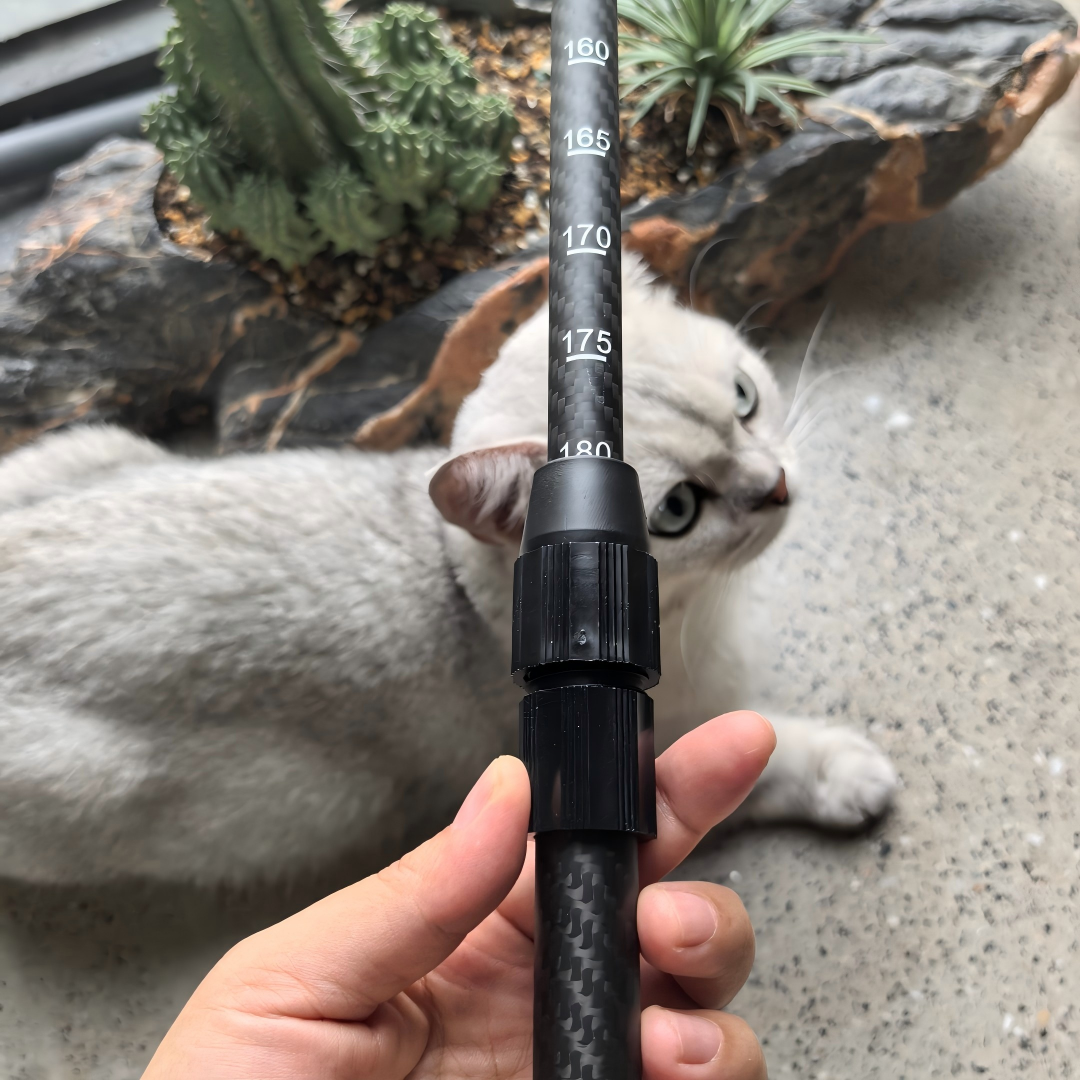
The Benefit: Permits anti-rotational leg designs and unlocks the complete leg with a simple twist of the wrist and extends it. It also allows full integration with custom-produced metal lock collars. Laser engraved scale & graduation Markings No guess work when it comes to leg position. We offer permanent high contrast laser etching on the surface of the carbon fibre.
The advantage: A millimetre adjustment for each leg guarantees that the photographer and surveyor may be assured their tripod is level even on uneven terrain. Unlike stickers or printed ink that goes off due to humidity and friction, the laser-engraved scales are readable for the life of the tripod. Custom Wall Thickness (WT) & Outside Diameter (OD)Telescoping systems are very close tolerances.
A variation of 0.1mm or more might cause a leg to stick or slip under stress. Our nested tubes are precision honed on the outer diameters to ensure smooth and fluid extension and retraction and the wall thickness is designed to balance weight with crush resistance.
Work with a Leading Carbon Fibre Components Manufacturer.
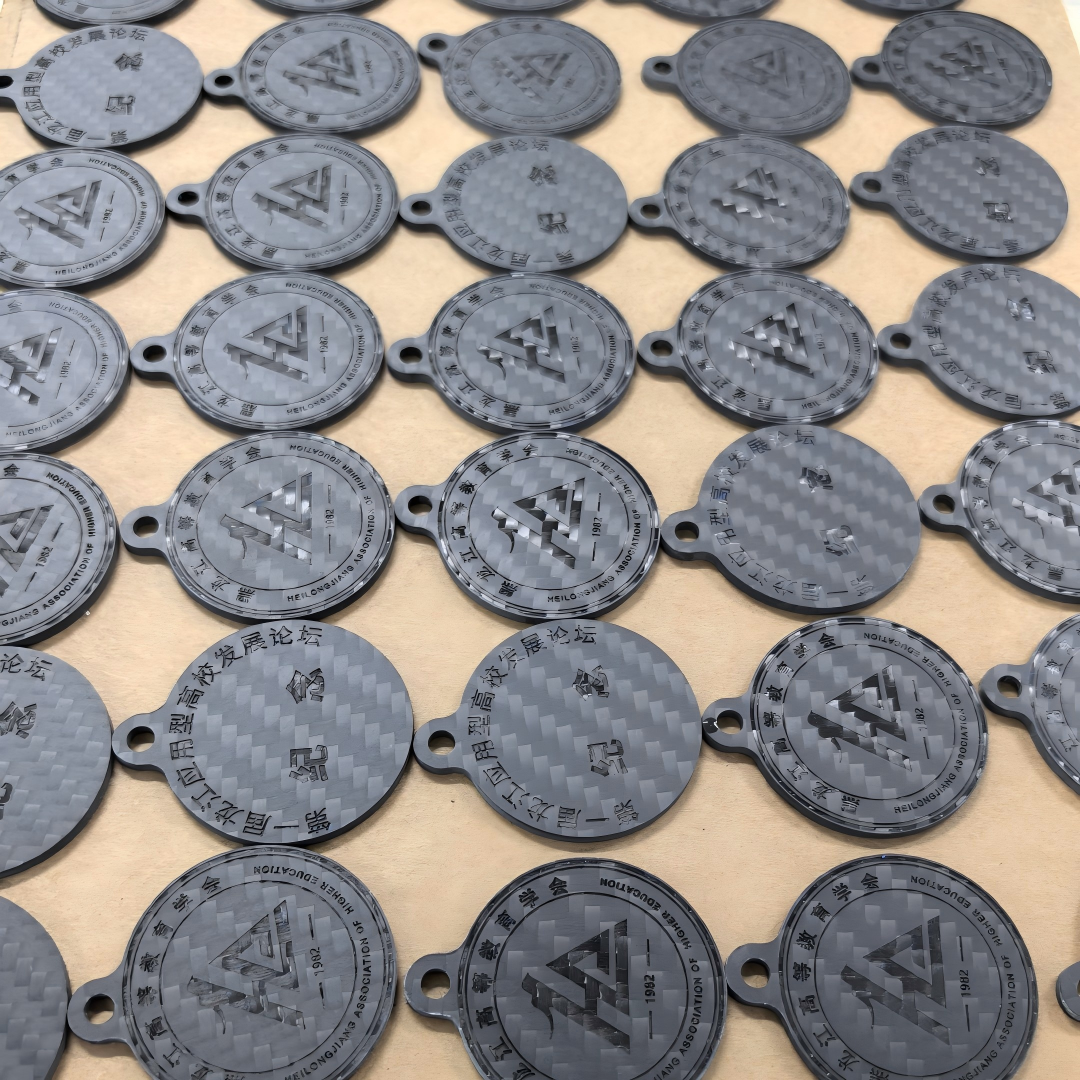
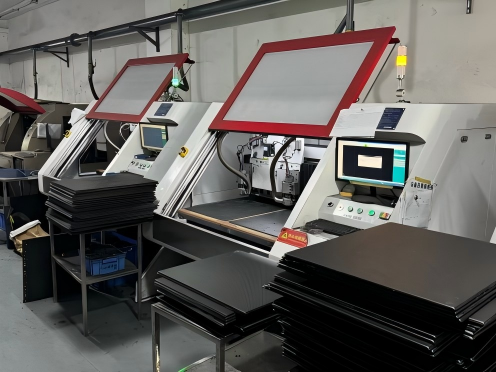
Hobbycarbon is a professional OEM & ODM manufacturer of high performance carbon fibre tubes, carbon fiber plates, CNC carbon fiber cutting, CNC metal service and hardware with logo services for optical, photographic and industrial equipment industries.
Hobbycarbon is a professional OEM & ODM manufacturer of high performance carbon fibre tubes, carbon fiber plates, CNC carbon fiber cutting, CNC metal service and hardware with logo services for optical, photographic and industrial equipment industries.
8 layers of carbon fibre weaves for optimum rigidity? Custom CNC routeing for custom lock mechanisms? Permanent Laser Scales for High End Positioning?
Our engineers can take your blueprint and make it a reality.