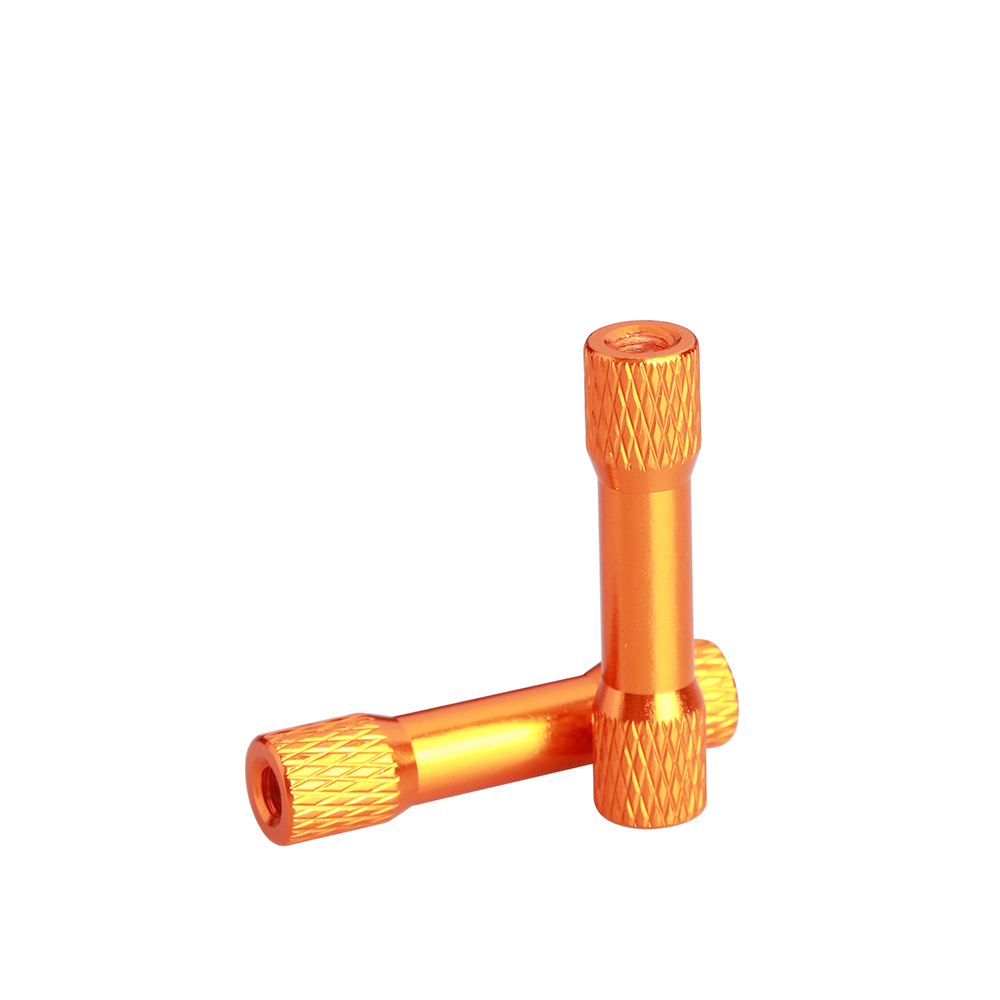
In high-end manufacturing fields such as aerospace, electronic equipment, and new energy vehicles, the aluminum knurled standoff, a seemingly tiny yet crucial component, is becoming a core solution for structural connections and space management thanks to its lightweight, high-strength, and precision design. This micro-component, based on aluminum alloy, achieves breakthroughs in both functionality and aesthetics through a unique knurling process and anodizing treatment, driving the evolution of industrial design towards greater efficiency and durability.
Material Properties: A Perfect Balance of Lightweight and High Strength
The core advantage of aluminum knurled standoffs lies in their material selection. Mainstream products utilize 6061-T6 or 7075-T6 aluminum alloys, both renowned for their excellent mechanical properties:
6061-T6 aluminum alloy: Containing magnesium and silicon, it achieves a tensile strength of 290 MPa and an elongation of 12% after heat treatment. It also offers excellent corrosion resistance and processability, making it suitable for cost-sensitive applications such as electronic equipment and industrial robots.
7075-T6 aluminum alloy: Zinc is the primary alloying element, resulting in a tensile strength of up to 572 MPa and a hardness of 150 HB. It is commonly used in load-bearing structures in aerospace applications, such as satellite mounts and drone frames, to meet reliability requirements in extreme environments.
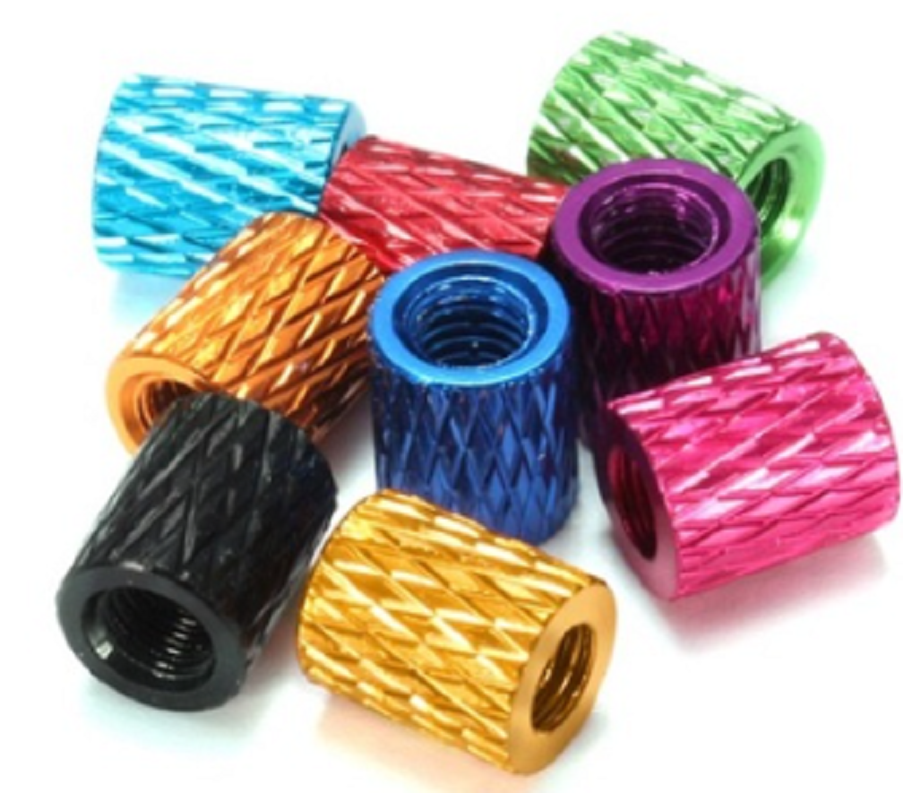
Surface treatment further enhances product performance. The anodizing process forms a 5-25μm oxide film on the aluminum surface, achieving a hardness of 300-600 HV and salt spray resistance of over 1000 hours. It also offers a variety of finishes, such as matte black and champagne gold, to meet the aesthetic demands of high-end equipment.
Production Process: A Trio of Precision Manufacturing
The production of aluminum knurled spacers requires three major steps: material pretreatment, CNC precision machining, and surface treatment. Each step requires rigorous control:
Material Pretreatment: The raw materials undergo ultrasonic cleaning to remove oil and contaminants, followed by an alkaline etching treatment to eliminate the surface oxide layer and ensure adhesion for subsequent processing.
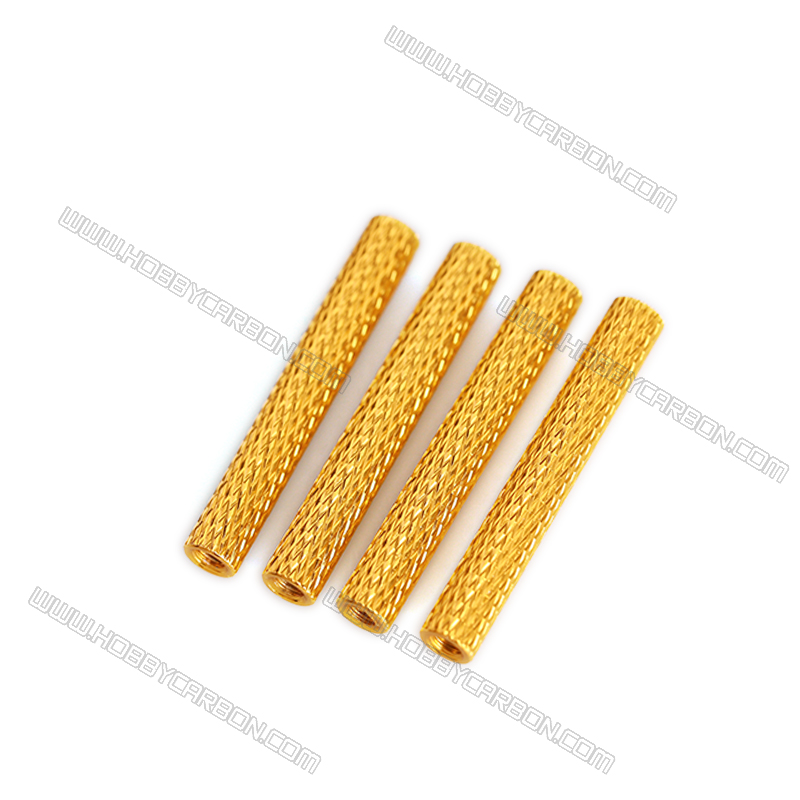
CNC Precision Machining: Utilizing a five-axis CNC machine, a knurling tool creates diamond or straight knurling patterns on the cylinder surface, increasing friction and preventing loosening. Internal thread tapping and OD finish turning are performed simultaneously, maintaining tolerances within ±0.02mm. For example, an aviation parts supplier achieved a 30% improvement in machining efficiency and a 15% reduction in unit cost by optimizing tool paths.
Surface Treatment: Anodizing is followed by a sealing treatment to plug the pores of the oxide film and prevent the intrusion of corrosive media. Some high-end products utilize hard anodizing, with a film thickness of up to 50μm and a hardness of up to 800HV, suitable for marine environments or chemical exposure.
Practical Applications: From electronic devices to "universal connectors" for interstellar exploration
Aluminum knurled spacers are used in a variety of applications:
Electronic devices: In server cabinets, spacers secure circuit boards to the enclosure. Their lightweight design reduces the weight of each device by 10%, while the knurled structure ensures stable connections even in vibrating environments. New Energy Vehicles: Aluminum spacers are used between battery modules for electrical isolation and mechanical support. The high strength of 7075 aluminum alloy can withstand hundreds of kilograms of pressure, while the anodized film protects against electrolyte corrosion.
Aerospace: Satellite solar panel mounts use titanium alloy knurled spacers, but aluminum alloy versions are gradually replacing some non-critical components, such as antenna mounts, due to their cost advantages.
Industrial Robots: In collaborative robot joints, spacers use precision threads for quick assembly and disassembly, while the knurled surface prevents operator slippage and improves maintenance efficiency.
Development Trends: Dual Driven by Intelligence and Sustainability
In the future, the development of aluminum knurled spacers will exhibit two major trends:
Intelligent Manufacturing: With the advancement of Industry 4.0, CNC machine tools will be integrated with AI visual inspection systems to monitor knurl depth and thread accuracy in real time, reducing the defect rate from 0.5% to below 0.1%. Furthermore, 3D printing technology has the potential to achieve integrated molding of complex structures, shortening R&D cycles.
Sustainable Upgrades: The use of recycled aluminum alloys will become mainstream. A European company has launched a separator column made of 70% recycled material, reducing its carbon footprint by 40% while maintaining performance comparable to virgin aluminum. Furthermore, aqueous anodizing is gradually replacing traditional chromate treatment, reducing wastewater treatment costs.